Logo

Evanston Symphony Orchestra

Lawrence Eckerling, Music Director

Announcing Our 2026–2027 Season

For The Love of Music

Subscribe Today

Save up to $50 and get the best seats

Celebrating Beethoven’s Brilliance
Great Romantics
Saint-Saëns Organ Symphony
A Mass for Peace

Musical Insights

Free Pre-Concert Preview Series!

Musical Insights Icon

Enhance your concert experience with a sneak preview — Composers come alive and their passions take center stage when ESO Maestro Lawrence Eckerling takes you on an insider’s tour of the history and highlights behind the music.

Merion’s Crystal Ballroom

529 Davis St, Evanston.
FREE and open to the public.

Please RSVP to 847-570-7815.

Light refreshments will be served and casual tours of apartments will be available after the program.
Latest News

Seeking timpanist

The Evanston Symphony Orchestra, now in its 80th season is auditioning for a new timpanist to join this award-winning orchestra.

2026 Programming of the Year Award recipient

We are honored to announce that we have received the 2026 Programming of the Year Award from the Illinois Council of Orchestras. The award covers programming for the 2024–2025 season.

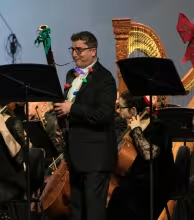
Peter Schmeiser
The view from the back of the stage

Jennifer and Peter Schmeiser moved to Evanston from Florida in 2017 for better jobs, better weather, and, as it turns out, a better orchestra!

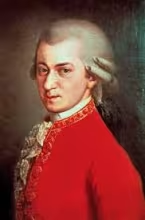
Masterful Mozart

Ave Verum Corpus has been hailed through the years as one of classical music’s great masterworks, a testament to Mozart’s incredible ability to create powerfully emotional works.

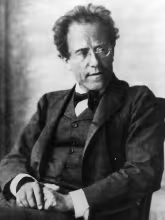
Mahler's Masterpiece

Symphony No. 2 in C Minor, “Resurrection,” by Gustav Mahler is as big as its name. The massive work, which the Evanston Symphony Orchestra will play in its last concert of the season on June 11, is grand in all directions: scope, intensity and length.

Mahler's Monumental "Resurrection" Symphony

Gustav Mahler was born at Kalischt near the Moravian border of Bohemia on July 7, 1860, and died in Vienna on May 18, 1911. Mahler originally wrote the first movement of his Symphony No. 2 in 1888 as a “symphonic poem” entitled Todtenfeier (“Funeral Rites”).